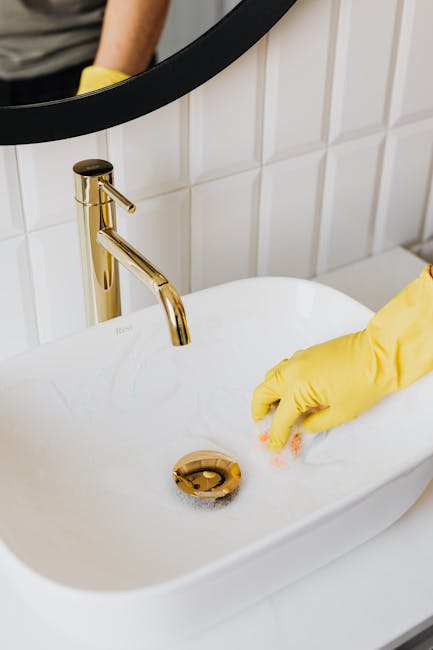
Natural Cleaning Products for the Bathroom: Are They Better Than Chemical Ones?
For routine bathroom maintenance on a regular cleaning schedule, natural cleaning products perform equally to conventional chemical ones — and better in three specific ways: they do not damage grout and sealant over time, they do not fill a small enclosed space with chlorine off-gassing, and they do not leave disinfectant residue on surfaces you touch with bare skin daily.
Green Wave Cleaning Team
Gold Coast & Brisbane
For routine bathroom maintenance on a regular cleaning schedule, natural cleaning products perform equally to conventional chemical ones. And in three specific ways, they are better: they do not damage grout and sealant finishes over time, they do not fill a small enclosed space with chlorine off-gassing and synthetic fragrance, and they do not leave disinfectant residue on surfaces you contact with bare skin every day.
There are also situations where conventional products have a performance advantage. Being honest about those is more useful than pretending natural products are better at everything.
Contents
- Why the bathroom is where product choice matters most
- What conventional bathroom cleaners actually contain
- Where natural products perform equally
- Where natural products are genuinely better
- Where the honest limits are
- Grout and sealant — the slow damage that shows up at inspection
- The enclosed space problem
- What GECA certification means for bathroom products
- How to tell a genuine natural bathroom product from a marketing claim
- What this looks like in practice
- When we are not the right fit
- Frequently Asked Questions
Why the bathroom is where product choice matters most
The bathroom is where the strongest conventional cleaning chemicals are typically concentrated: chlorine bleach for disinfection, hydrochloric acid for limescale, abrasive compounds for soap scum, synthetic fragrance in high-performance sprays. It is also the room where people have the most direct skin contact with recently cleaned surfaces — shower floors, bath edges, basin rims, toilet seats — and where they breathe the most enclosed air, including steam that carries product vapour from residue on hot surfaces.
For a home on a fortnightly cleaning schedule, those products are applied to the bathroom 26 times a year. The bathroom surfaces are also cleaned with more dwell time than other surfaces — sprays are applied and left to work before wiping. That increases both chemical contact with surfaces and airborne exposure in the room.
The product question in the bathroom is therefore not abstract. It is about what is on the shower floor when you stand in it barefoot the morning after a clean, what is off-gassing from tile grout heated by a morning shower, and what is accumulating on grout and sealant across a year of fortnightly applications.
What conventional bathroom cleaners actually contain
The compound classes most common in conventional bathroom cleaners:
Chlorine bleach
Sodium hypochlorite is effective at disinfection and at removing visible mould. It is also corrosive to coloured grout, coloured sealant, and natural stone surfaces with repeated application. Bleach on grout causes oxidisation of the colour compounds in grout pigment — producing the faded, patchy appearance of heavily cleaned grout over time. It releases chlorine gas as it degasses, which is the source of the distinctive bathroom smell after a bleach clean. In an enclosed bathroom without ventilation, chlorine concentrations from a freshly bleached toilet or shower are measurable.
Hydrochloric acid
Used in some heavy limescale removers and toilet bowl cleaners. Effective at dissolving mineral deposits. Corrosive to chrome tapware, natural stone, and some tile glazes with repeated application. Produces fumes in enclosed spaces.
Quaternary ammonium compounds
Used in disinfectant bathroom sprays. Leave a residue on surfaces after application that does not fully evaporate when the surface appears dry. Research has documented reproductive effects in mice from household quat exposure through residue contact. For surfaces that bare skin contacts daily — shower floors, bath edges, toilet seats — that residue is a recurring exposure.
Synthetic fragrance
Most conventional bathroom cleaners have a strong artificial fragrance component. In the small enclosed space of a bathroom heated by shower steam, synthetic fragrance concentrations are higher than in any other room in the home. For people with asthma or fragrance sensitivity, the bathroom is typically the most problematic room in a conventionally cleaned home.
Where natural products perform equally
For regular maintenance cleaning of a bathroom that is cleaned fortnightly, plant-based products clean to the same visual standard as conventional products:
Tile and shower screen. Plant-based citric acid formulations remove soap scum and light mineral deposits from tiles and shower glass without leaving residue. The result is visually identical to a conventional acidic bathroom spray.
Basin and vanity. Plant-derived surfactants remove toothpaste, soap, and general grime from basin and vanity surfaces as effectively as conventional multi-surface cleaners.
Toilet. Plant-based toilet cleaners using citric acid and plant surfactants clean and deodorise to the same standard as conventional toilet bowl cleaners for a fortnightly maintained toilet. They do not disinfect to clinical pathogen-elimination standards — but a residential bathroom toilet does not require clinical disinfection under normal circumstances.
Floors. Plant-based floor cleaners mop bathroom tiles to the same standard as conventional floor products for a maintained surface.
The performance equivalence holds for maintained surfaces — bathrooms cleaned on a consistent fortnightly schedule. It begins to diverge when surfaces have not been maintained and have significant mineral deposit accumulation or mould penetration.
Where natural products are genuinely better
Grout and sealant lifespan. Bleach-free, acid-free formulations do not cause the progressive colour loss and seal deterioration that bleach and strong acids produce in grout and flexible sealant around baths and showers. Over a two-year tenancy or the life of a bathroom renovation, the difference is visible.
Surface contact safety. Natural bathroom products do not leave quat disinfectant residue on surfaces bare skin contacts daily. They do not leave chlorine compound residue on shower floors where children stand barefoot. For families with young children or with adults who have skin sensitivity, this is a direct health difference rather than a preference.
Enclosed space air quality. No chlorine off-gassing, no high-concentration synthetic fragrance in a steam-heated enclosed space. For the detail of how this works, see indoor air quality and cleaning. The bathroom is where this matters most.
Chrome and tapware. Bleach-free and non-acidic formulations do not contribute to the progressive oxidisation and pitting of chrome tapware that bleach-based sprays cause over repeated application.
Where the honest limits are
Conventional cleaning chemicals are a problem in homes with kids, pets, and people with sensitivities. Eco does not mean less effective. It means you are not trading a clean house for a chemical headache.
That said, there are situations where conventional products have a genuine performance advantage:
Heavy limescale. In areas with hard water, limescale deposits on shower screens, tapware, and tiles that have been allowed to build up for months require a strong acid to dissolve efficiently. Plant-based citric acid formulations handle light to moderate mineral deposits well. For heavy accumulation — particularly on shower screens that have developed water spot etching — a stronger acid may be required. This situation rarely arises on a maintained fortnightly schedule, but it is honest to acknowledge it.
Mould penetrating grout. Surface mould on tiles responds to plant-based hydrogen peroxide formulations. Mould that has penetrated the substrate of porous grout may require bleach to address the full depth of growth. If a bathroom has been neglected for an extended period, an initial remediation clean may need conventional products before transitioning to a plant-based maintenance schedule.
Post-illness disinfection. If a bathroom has been used by someone with a notifiable pathogen and requires documented disinfection to a clinical standard, plant-based products are not the right specification for that job. That is a different scope from domestic cleaning.
For a bathroom on a regular fortnightly schedule, the first two situations do not arise — maintained surfaces do not develop heavy limescale or penetrating mould. The honest limit of natural products is therefore relevant primarily to initial recovery situations, not to ongoing maintenance.
Grout and sealant — the slow damage that shows up at inspection
This is the most practically important reason to choose natural bathroom cleaners for a regularly cleaned property — particularly for renters.
Grout is a porous cementitious material. Coloured grout contains pigment compounds that are susceptible to bleach oxidisation. A single bleach application does not produce visible damage. Forty-eight applications over two years of fortnightly cleaning produce grout that is noticeably faded, patchy, and lighter than the original — particularly in corners and along floor grout lines where product dwell time is longest.
Flexible sealant around baths, shower trays, and wet areas is similarly susceptible. Bleach causes the plasticisers in flexible sealant to break down, producing the discolouration and brittleness that eventually requires reseal. On a regular schedule with bleach-based bathroom cleaners, sealant around a bath or shower starts showing breakdown within eighteen months to two years.
For homeowners, this means premature and avoidable renovation costs. For renters, it means a condition report dispute at exit — grout discolouration and sealant breakdown attributed to cleaning practices rather than normal fair wear and tear. The Residential Tenancies Authority Queensland's condition report standards RTA Queensland make no special provision for cleaning product-induced deterioration as fair wear and tear.
Plant-based, bleach-free, non-acidic bathroom cleaners clean bathroom surfaces to the same visual standard without any of this progressive degradation. Over a two-year tenancy or a five-year owned-home maintenance schedule, the grout and sealant condition in a bathroom cleaned with natural products is demonstrably better than one cleaned with conventional bleach-based products.
The enclosed space problem
A couple in New Farm reached out asking specifically about our products. They were going through IVF and their specialist had advised them to minimise exposure to synthetic chemicals and hormone-disrupting compounds found in many conventional cleaning products.
They had done their research. They asked us about specific ingredients, certifications, and whether we could guarantee no cross-contamination from products used at other properties.
We went through everything with them. Sent them our product safety data sheets. They booked a fortnightly clean and stayed with us through the whole process. They sent us a photo of their baby when she was born. Still one of the best messages we have ever received.
The bathroom was the primary concern in that conversation — specifically the shower and bath surfaces, the toilet, and the cleaning products applied to surfaces that both partners contacted with bare skin daily during a medically significant period. The compound classes they were most concerned about — phthalates from synthetic fragrance, quaternary ammonium compounds from disinfectant sprays, chlorine compounds — are all present in standard conventional bathroom cleaner formulations.
That conversation was more specific than most clients ever get, but the underlying concern applies to any household: the bathroom is where you have more direct skin contact with recently cleaned surfaces than anywhere else in the home.
What GECA certification means for bathroom products
Good Environmental Choice Australia (GECA) certifies bathroom cleaning products against Australian environmental and toxicology standards. For bathroom-specific certification, this includes:
- Prohibition of chlorine bleach as a standard active ingredient
- No synthetic fragrance blends (fragrance-free or specifically disclosed natural components)
- Confirmed biodegradability of all surfactant and active compounds
- No quaternary ammonium compounds in standard formulations
- pH assessment to ensure the product is not corrosive to standard bathroom surfaces at the recommended dilution
A bathroom cleaner on the GECA register has been through that assessment independently of the manufacturer. A product described as "natural," "eco-friendly," or "chemical-free" without naming a certifying body has not. For more on what independent certification actually checks, see what non-toxic cleaning actually means.
How to tell a genuine natural bathroom product from a marketing claim
The markers that indicate a genuinely natural bathroom cleaner versus a conventional product with eco packaging:
Ingredient disclosure. A genuine natural bathroom cleaner lists its active ingredients specifically — citric acid, sodium bicarbonate, plant-derived surfactant by name, essential oil components individually. A product that lists "fragrance" or "parfum" without further specification has not disclosed what is in the bottle.
No bleach. A product with sodium hypochlorite as an active ingredient is not a natural cleaner by any meaningful standard, regardless of its marketing.
Named certifying body. GECA, the EU Ecolabel, or EPA Safer Choice. "Certified eco" or "green certified" without naming the certifying body means the manufacturer certified it themselves.
pH range. Genuine bathroom cleaners for regular use have pH ranges that are effective at removing soap scum and light deposits without being corrosive to grout and sealant. Very low pH (strong acid) or very high pH (strong alkaline) products require careful use on specific surfaces.
For are plant-based cleaning products as effective as conventional ones, the same assessment framework applies to bathroom products specifically.
What this looks like in practice
We are not the cheapest option on the Gold Coast. We have made peace with that. The clients who choose us because they want reliable, eco-certified, and consistent are the ones who refer their neighbours and stay for years. Competing on price in cleaning is a losing game. We do not play it.
For a Gold Coast or Brisbane home on a fortnightly domestic cleaning schedule, the bathroom clean with our products:
The shower screen is cleaned with a plant-based citric acid formulation that removes soap scum and light mineral deposits without etching the glass or stripping the grout. Tiles are cleaned with a plant-surfactant spray, pH-balanced for tile and grout. The toilet is cleaned with a plant-acid bowl cleaner and a plant-surfactant spray on external surfaces — no quat residue on surfaces you contact daily. The basin and vanity are wiped with fragrance-free plant-based multi-surface cleaner. The floor is mopped with a plant-derived floor surfactant.
The bathroom looks the same as a conventionally cleaned bathroom. After a year, the grout looks the same as it did at the start. After two years, it still looks the same.
Our eco approach covers the specific product standards we use and how to verify them. For any Gold Coast or Brisbane household wanting a regular cleaning service with certified bathroom products — get a quote at greenwavecleaning.com.au/get-a-quote.
When we are not the right fit
If your bathroom has not been professionally cleaned in over a year and has significant limescale, penetrating mould in grout, or sealant breakdown — our standard fortnightly service is not the starting point. An initial deep cleaning visit that addresses the underlying condition first gives the regular service a baseline to maintain.
If you require clinical-level bathroom disinfection — for a household member immunocompromised by a specific medical condition, or a post-illness remediation — that is a different specification from residential domestic cleaning.
If you specifically want bleach-based bathroom cleaning because that is your standard and you are comfortable with it — we are not the right fit. Our product approach applies to every job.
Frequently Asked Questions
Are natural cleaning products as good as chemical ones for bathrooms?
For routine bathroom maintenance on a fortnightly cleaning schedule, yes. Tiles, shower screens, basins, toilets, and floors cleaned with eco-certified plant-based products come out to the same visual standard as those cleaned with conventional products. The honest performance gap is in heavy limescale deposits and penetrating grout mould — situations that do not arise in a maintained bathroom. Where natural products are better: grout and sealant lifespan, indoor air quality in an enclosed space, and surface safety for daily bare skin contact.
Do natural bathroom cleaners actually disinfect?
Plant-based bathroom cleaners using hydrogen peroxide or plant-acid formulations reduce microbial load on bathroom surfaces to a standard appropriate for domestic use. They do not achieve the same pathogen-elimination profile as clinical-grade quaternary ammonium disinfectants. For a residential bathroom under normal use conditions, the domestic standard is appropriate. For post-illness disinfection or immunocompromised household members, a different specification applies.
Why does bleach damage bathroom grout over time?
Chlorine bleach is a strong oxidising agent. Coloured grout contains pigment compounds that are susceptible to bleach oxidisation — producing progressive colour loss with repeated application. Flexible sealant around baths and showers contains plasticisers that bleach causes to break down, leading to brittleness and discolouration. Neither effect is visible from a single application. On a fortnightly cleaning schedule over two years, both become apparent. Plant-based, bleach-free bathroom cleaners avoid this entirely.
What should I look for in a natural bathroom cleaner?
Full ingredient disclosure without "fragrance" or "parfum" as a catch-all, no sodium hypochlorite (bleach) as an active ingredient, independent certification from a named body — GECA (Good Environmental Choice Australia) in the Australian context — and pH assessment confirming the product is appropriate for tile, grout, and sealant surfaces. The most reliable single marker is the presence of the product on the GECA publicly searchable register.
How do I know if my cleaning service uses natural products in the bathroom?
Ask directly: what products do you use in the bathroom specifically? Are they bleach-free? Are they independently certified — GECA or equivalent? A service with a genuine natural product standard will answer those questions specifically. A service that responds vaguely — "we use eco-friendly options" or "natural products on request" — is using conventional products as the default.
Photo: Pexels — royalty free
Need professional eco cleaning?
Green Wave Cleaning serves Gold Coast and Brisbane with plant-based, eco-certified products on every job.
Get a personalised quote