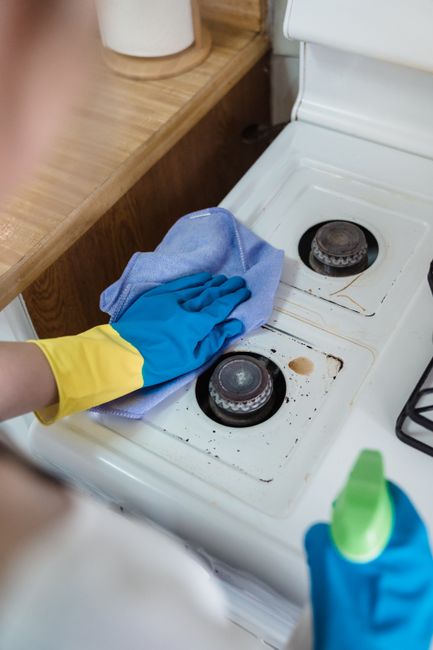
What Is Included in a Professional Deep Clean and When Do You Need One
A professional deep clean covers everything a regular clean does, plus the items that are skipped in a maintenance visit: inside ovens, inside cupboards, window tracks, rangehood filters, skirting boards, door frames, and surfaces that accumulate grime over months rather than weeks. When you need one depends on the current state of the property and what you want to achieve.
Green Wave Cleaning Team
Gold Coast & Brisbane
A professional deep clean covers everything a regular maintenance clean does, plus the surfaces, fixtures, and areas that are skipped in a standard fortnightly visit: inside ovens, inside cupboards, window tracks, rangehood filters, skirting boards cleaned by hand, door frames, ceiling fans, vents, and behind or under appliances.
The scope is broader, the dwell time on each surface is longer, and the job takes two to three times as long as a regular clean on the same property. The result is a property reset to a baseline that a regular cleaning schedule can then maintain — rather than a property that is clean on visible surfaces and accumulated on everything else.
Contents
- How a deep clean differs from a regular clean
- What is included — room by room
- Why it takes longer
- The five situations that tell you when to book one
- The regular clean vs. deep clean cost calculation
- Deep clean first, then regular schedule
- What a deep clean cannot fix
- What to expect on the day
- When we are not the right fit
- Frequently Asked Questions
How a deep clean differs from a regular clean
A regular domestic cleaning visit maintains a clean home. It covers the surfaces that accumulate visible grime within a fortnight: benches, sinks, toilets, showers, floors, and general dusting. Done consistently, it keeps a home in good condition without requiring intensive effort each visit.
A deep clean addresses what the regular clean does not touch — the build-up that happens over months and years on surfaces that are not part of a maintenance rotation. There is no meaningful overlap in scope; it is not a more thorough version of the same visit. It is a different scope with a different purpose.
The practical difference:
| Regular clean | Deep clean | |---|---| | Wipe accessible benches | Wipe benches + clean inside cupboards and drawers | | Clean stovetop | Clean stovetop + oven interior, racks, and griller | | Clean toilet and basin | Full bathroom including grout scrub, tracks, behind fittings | | Mop floors | Mop floors + skirting boards, door frames, floor vents | | General dusting | Ceiling fans, light fittings, vents, air conditioning returns | | Wipe visible surfaces | Window tracks, sliding door tracks, fly screen frames | | Shower clean | Shower including shower head, tile grout, and screen seals |
Both use the same eco-certified plant-based products. The difference is time, scope, and the level of attention given to each surface.
What is included — room by room
Kitchen
- Inside oven: racks removed, oven cavity, door glass, and griller
- Rangehood filter: degreased and cleaned (or noted if requires replacement)
- Inside cupboards and drawers: wiped out, including under shelf liners if present
- Inside pantry if included as an add-on
- Inside fridge if included as an add-on
- Inside dishwasher if included as an add-on
- Stovetop: burner grates, drip trays, knobs
- Splashback: full degrease including grout if tiled
- Benches: full wipe including behind appliances where accessible
- Sink and tapware: descaled and polished
- Window tracks and sills
- Door frames and architraves
- Skirting boards
Bathrooms
- Toilet: full clean including under the rim, around base, behind cistern
- Shower: tiles scrubbed, grout cleaned, shower screen descaled (water spots and soap residue), shower head, and hob or screen seal
- Bath if present: full scrub including tap surround and overflow plate
- Basin and vanity: descaled tapware, vanity interior if accessible
- Floor tiles and grout
- Mirror and mirror cabinet exterior
- Towel rails, toilet roll holder, and other hardware
- Exhaust fan cover: dusted or wiped
- Skirting boards and door frames
Living areas and bedrooms
- Ceiling fans: blades and housing wiped
- Light fittings: dusted or wiped where reachable
- Air conditioning return vents: dusted
- Skirting boards: wiped by hand
- Door frames and tops of doors
- Window sills and tracks
- Blinds or shutters if included as an add-on
- General dusting of all surfaces including tops of wardrobes and bookshelves
- Floors vacuumed and mopped
Laundry
- Inside and outside of appliances (washing machine drum lip and filter, dryer lint trap)
- Sink and tapware
- Bench surfaces
- Skirting boards and floor
Additional items (typically add-ons)
- Window cleaning inside and out
- Balcony or patio
- Garage sweep
- Wall spot cleaning
- Internal window furnishings (blinds, shutters)
All add-ons are specified at the time of quoting. The standard deep clean scope is fixed; additional items are scoped and priced separately.
Why it takes longer
A regular clean on a three-bedroom house runs two to three hours with a two-person team. A deep clean on the same property typically runs four to six hours. The difference is not speed — it is scope and dwell time.
Oven cleaning alone takes thirty to forty-five minutes when done properly: racks soaked, cavity treated, door glass cleaned from both sides, griller returned to condition. A rangehood filter that has not been cleaned in months requires degreasing time. Inside cupboards that have accumulated crumbs, oil residue, and condensation from years of use require careful wiping rather than a quick spray.
Grout cleaning in a shower requires applying product, allowing dwell time, scrubbing by hand, and rinsing — then checking the result and repeating for areas that need more attention. A shower screen with mineral deposit build-up requires acid treatment, dwell time, and manual polish.
The time cannot be compressed. A deep clean that is rushed is a regular clean with a few extra items. The scope only delivers its result if each item is given adequate time.
The five situations that tell you when to book one
1. Moving into a new property. A property handed over by previous tenants or an owner-occupier has been cleaned to exit inspection standard, not to your living standard. Inside cupboards, inside the oven, and under appliances are often skipped in an exit clean because they are not always checked at inspection. A deep clean on move-in establishes the property at your baseline before your regular schedule begins.
2. Moving out of a rental. End-of-lease cleaning is a specific scope that overlaps with a deep clean but is not identical — it follows the condition report checklist from the ingoing inspection and is assessed against the property's condition at the start of the tenancy. A professional end-of-lease clean by a service familiar with the RTA Queensland standard removes the risk of a bond dispute over cleaning.
3. When a regular clean is no longer enough. A client in Teneriffe had been having his apartment cleaned weekly by another company for three months and was quietly disappointed every time but could not identify why. We did a walk-through before quoting. The grout between the tiles had never been properly cleaned. The rangehood filter was already coated. The shower screen had water spots baked in from week one. The previous cleaner had been wiping surfaces but not actually cleaning them.
We started with a deep clean to reset everything properly. He stood in the bathroom afterwards and said this is what I thought it was supposed to look like. He has been a weekly client since.
That situation — where regular maintenance visits have been done but the baseline was never properly established — is the most common reason a deep clean is needed mid-tenancy or mid-ownership.
4. After a period of illness, renovation, or neglect. A property that has had reduced cleaning for an extended period, or that has been through building work, accumulates the kind of grime that a maintenance clean cannot address in a single visit. A deep clean recovers the baseline; the regular schedule maintains it from there.
5. Seasonal reset. Some clients on a regular fortnightly schedule book a deep clean once or twice a year to catch the items that accumulate beyond the regular scope — typically coinciding with school holidays or before family visits from interstate.
The regular clean vs. deep clean cost calculation
People who skip regular cleans to save money end up paying for deep cleans twice a year. A consistent fortnightly clean costs less over twelve months than two emergency deep cleans and is better for the property.
The arithmetic: a two-person team at four to six hours per deep clean, versus a two-hour maintenance visit every fortnight. Over twelve months, 26 maintenance visits are less total time than two emergency deep cleans on a neglected property — and the property is in better condition throughout.
The argument for a regular domestic cleaning schedule is strongest when compared against the alternative of waiting until the property needs a deep clean. See why hiring a regular house cleaner saves money in the long run for the full cost comparison.
For properties that are already on a regular schedule, the deep clean is not a replacement — it is an initial reset, or an annual supplement for the items outside the maintenance scope.
Deep clean first, then regular schedule
For a property that has not been professionally cleaned recently, the right sequence is: deep clean first, then start a regular maintenance schedule.
Starting a fortnightly maintenance clean on a property that needs a deep clean produces limited results. The maintenance visit covers the visible surfaces; the baseline grime in the oven, cupboards, and grout remains. Over several fortnightly visits it becomes clear that maintenance cleaning cannot address what was there before it started.
A deep clean on the front end takes the property to a clean baseline. The fortnightly schedule then maintains that baseline with each visit. The result is a property that is consistently clean, not one that is clean on the surface and accumulated underneath.
For preparing the property before either type of visit, see how to prepare your home before the cleaners arrive.
What a deep clean cannot fix
A deep clean removes surface grime, grease, mineral deposits, soap scum, and biological matter from household surfaces. It does not:
- Fix mould caused by structural water ingress or inadequate waterproofing. Surface mould on tiles can be addressed; mould growing inside walls or through inadequately sealed surfaces requires a builder or remediation specialist.
- Restore surfaces damaged by cleaning products, age, or physical wear. Grout that is cracked or missing, sealant that is broken down, shower glass that is permanently etched from hard water — these require repair or replacement, not cleaning.
- Remove deep stains from porous surfaces. Some stains in unsealed grout, unsealed stone, or porous tile have penetrated past the depth that cleaning can address.
- Clean inside walls or ceilings. Wall spot cleaning addresses visible marks and scuffs; it is not a substitute for repainting.
If a property has issues in any of those categories, it is worth knowing that before booking so the scope is set correctly and the outcome is clear.
What to expect on the day
A deep clean typically runs four to six hours for a three to four-bedroom house, longer for larger properties. Our team arrives with all equipment and products — no preparation on your part beyond clearing surfaces where practical and making sure the oven, fridge (if included), and dishwasher (if included) are accessible and not in use.
You do not need to be home for the duration. Most clients leave a key or provide access and return when the team is finished.
We use eco-certified plant-based products on every job. If you have specific materials in your home — natural stone, timber floors, heritage tiles — let us know at the time of booking and we will confirm appropriate product selection for those surfaces.
For a quote on a deep clean for your Gold Coast or Brisbane property, the cost depends on property size, bedroom count, and any add-ons. Get your personalised quote at greenwavecleaning.com.au/get-a-quote or visit our deep cleaning service page for more detail on the scope.
When we are not the right fit
If you need a quote matched the same day, we are likely not available — deep cleans are scheduled ahead.
If your property has structural issues — mould from water ingress, damaged surfaces — that need to be addressed before a clean makes sense, we would tell you that on the walk-through rather than take the job and deliver a result that does not meet your expectation.
If you are looking for the cheapest deep clean quote on the Gold Coast or in Brisbane, that is not us. Eco-certified products, an employed team, and the time a proper deep clean requires do not produce the lowest price in the market.
For situations where we are the right fit — see the signs you need a regular cleaner not just an occasional one to understand where regular maintenance fits alongside a deep clean booking.
Frequently Asked Questions
What is included in a professional deep clean?
A professional deep clean includes everything in a regular maintenance clean plus: inside oven (cavity, racks, door glass, griller), inside cupboards and drawers, rangehood filter degreasing, inside window tracks and sliding door tracks, skirting boards cleaned by hand, door frames and architraves, ceiling fans, air conditioning return vents, light fittings, and a thorough bathroom including grout scrubbing, shower screen descaling, and behind toilet and basin fittings. Add-ons such as inside the fridge, inside the dishwasher, window cleaning, blinds, and balcony are scoped and priced separately.
How is a deep clean different from a regular clean?
A regular maintenance clean covers the surfaces that accumulate visible grime within a fortnight and maintains a clean baseline. A deep clean addresses the build-up on surfaces outside the regular maintenance scope — inside ovens and cupboards, grout, tracks, behind fittings — and takes two to three times as long. The two are complementary: a deep clean establishes the baseline, the regular schedule maintains it.
How long does a professional deep clean take?
For a three to four-bedroom house, a professional deep clean typically takes four to six hours with a two-person team. Larger properties, properties that have not been professionally cleaned recently, or properties with significant add-ons (windows, balconies, multiple bathrooms) take longer. Time is not compressed — the scope only delivers its result if each item is given adequate dwell and treatment time.
When should I book a deep clean instead of a regular clean?
Five situations warrant a deep clean rather than a regular maintenance visit: moving into a new property, moving out of a rental for an end-of-lease clean, when a regular clean is no longer visibly improving the state of the property (indicating the baseline was never properly established), after a period of illness, renovation, or neglect, and as an annual supplement to a regular schedule for items outside the maintenance scope.
Should I do a deep clean before starting a regular cleaning schedule?
Yes, if the property has not been professionally cleaned recently. Starting a fortnightly maintenance schedule on a property that needs a deep clean means the visible surfaces are maintained while the baseline grime in ovens, cupboards, and grout remains. A deep clean on the front end takes the property to a clean baseline; the maintenance schedule then keeps it there. This is also the more cost-effective sequence over time.
Photo: Pexels — royalty free
Need professional eco cleaning?
Green Wave Cleaning serves Gold Coast and Brisbane with plant-based, eco-certified products on every job.
Get a personalised quote